Classic Games That Predicted the Present — And Hit Harder Now
Some games from the PS2 and Xbox era look dated. Others feel like they were written yesterday. Freedom Fighters predicted urban resistance cells. Mercenaries predicted the PMC economy. Deus Ex predicted surveillance capitalism and pandemic conspiracies. These are the games from older console generations that deserve a second look — not just for nostalgia, but because the worlds they imagined have arrived.
Freedom Fighters (2003) — The Urban Resistance Simulator
IO Interactive released Freedom Fighters in 2003 — a third-person shooter set in an alternate-history United States occupied by a Soviet superpower. You play Christopher Stone, a plumber turned guerrilla commander, organizing resistance cells across a Soviet-occupied Manhattan.
In 2003, it was a clever alt-history shooter. In 2025, the mechanics read like a design doc extracted from a geopolitical briefing. The game's cell-based resistance structure — recruiting fighters, assigning them to safe houses, coordinating simultaneous strikes on supply lines and communication infrastructure — mirrors the organizational models that analysts now study in real insurgency documentation. Freedom Fighters was asking 'how does urban resistance actually work?' twenty years before it became a mainstream question.
The game never got a sequel, despite being one of the most mechanically accomplished third-person shooters of its generation. IO Interactive went on to build Hitman instead. But Freedom Fighters exists on GOG for under $10 and is playable today — and it hits with a weight its original audience couldn't have anticipated. The moment you liberate a New York borough from occupation forces and watch civilian morale rise, the game stops being just a shooter.
Freedom Fighters is available on GOG.com with modern OS compatibility patches. No Steam release exists currently. The original Xbox and PS2 versions are readily available used. The PC version with a gamepad is the recommended way to play.
Mercenaries: Playground of Destruction (2005) & Mercenaries 2: World in Flames (2008) — The PMC Economy as Entertainment
The Mercenaries games arrived before the term 'private military contractor' was household vocabulary. You played as one of three contracted soldiers hired by the Allied Nations to pursue deck-of-cards style targets in North Korea (Mercenaries 1) and Venezuela (Mercenaries 2). The entire premise — a private company deploying combat assets for geopolitical clients in exchange for payment — was treated as a cool action game premise.
Then the Wagner Group happened. Then Blackwater became Academi and spawned successors. Then PMC deployment in Africa, in Eastern Europe, in the Middle East became a regular feature of international news. The Mercenaries games, played today, feel less like action game fantasy and more like a corporate brochure for an industry that barely existed when they shipped. The in-game economy — factions bidding for your services, contracts with competing interests, collateral damage affecting faction standing — mirrors documented PMC operation models with uncomfortable accuracy.
Mercenaries 1 is the better game — tighter, more focused, with one of the PS2 era's best open worlds. Mercenaries 2 is rougher, ambitious, and notorious for its 'There's a Place in the World for a Mercenary' trailer, which reached meme status but undersold a genuinely interesting game about Venezuelan oil politics. Both games are backward-compatible on modern Xbox hardware and available used for pennies.
The Wagner Group's documented operations in Africa, Syria, and Ukraine — and the regulatory vacuum that allowed private military companies to operate with minimal oversight — are exactly the world the Mercenaries games satirized. Replay them with that context and they stop feeling like fantasy.
Deus Ex (2000) — The Surveillance State Prophecy
Warren Spector's immersive sim masterpiece released in 2000 and was called 'paranoid conspiracy thriller' by reviewers. The game's world featured: government surveillance of civilian communications, corporate control of global financial infrastructure, engineered pandemics used for population control, nano-augmentation creating a two-tier society of enhanced and unenhanced citizens, and private security forces operating outside democratic oversight.
In 2000, these were considered lurid sci-fi premises. In 2025, most of them are news stories. The UNATCO organization — a United Nations anti-terrorist force that is, of course, secretly controlled by a private corporate cabal — has direct analogs in documented intelligence community structures that emerged in the 2010s. The game's opening 'biomod' debate, in which human augmentation is framed as a class issue rather than a technology issue, presages every current debate about AI cognitive enhancement and productivity optimization.
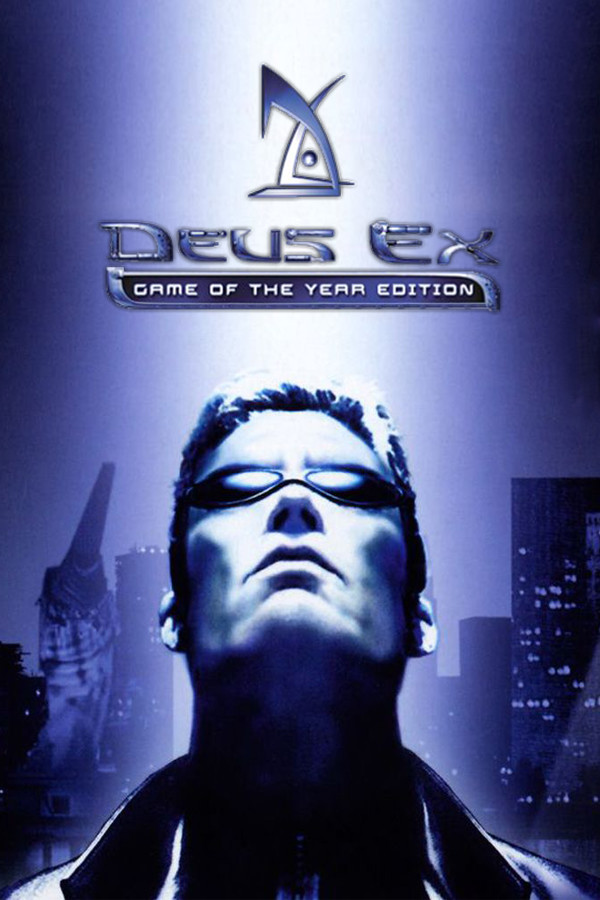
Deus Ex (2000)
One of the greatest games ever made, now available on Steam for under $5. The immersive sim design — multiple solutions to every problem, player-authored narrative, a world that responds to approach — has never been fully equaled. The conspiracy narrative hits completely differently post-2020. The original aged better than its sequels.
See full verdict →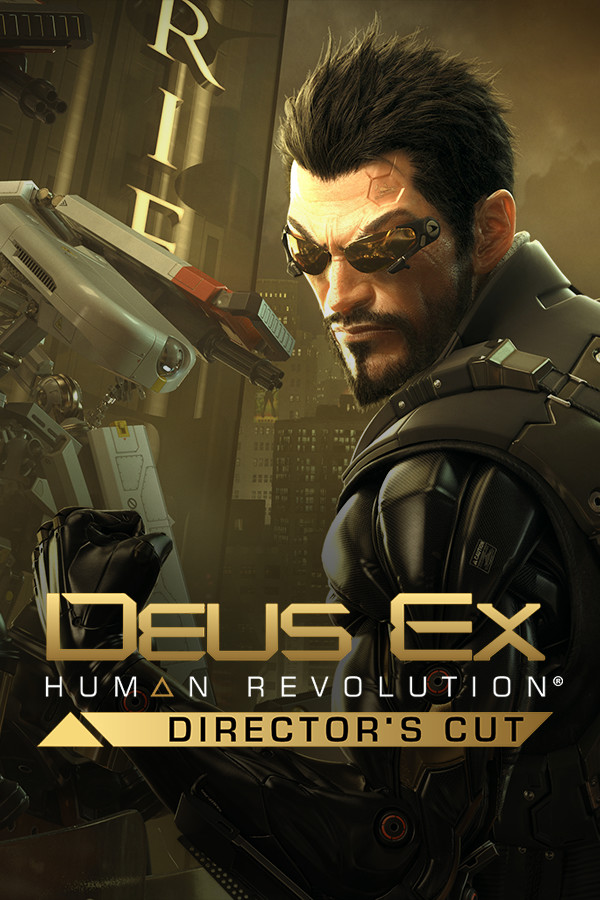
Deus Ex: Human Revolution
The best of the modern Deus Ex entries. Human Revolution's augmentation-as-class-conflict premise — the 'augs' who can afford body modification versus those who can't — is the franchise's sharpest political statement since the original. The boss fights are the notorious weakness. Everything else holds up beautifully.
See full verdict →Republic Commando (2005) — Following Orders and Questioning Them
Star Wars: Republic Commando was a tactical squad shooter about elite clone soldiers operating in the margins of the Clone Wars. The marketing pitched it as the gritty Star Wars game — grimy, efficient, about professional soldiers doing professional work.
What Republic Commando actually explored, in the space between missions, was the ethics of engineered soldiers who exist solely to follow orders. Delta Squad — Boss, Fixer, Scorch, Sev — are clones created for a purpose they didn't choose, fighting for a government they have no loyalty to beyond conditioning, and beginning to ask questions about what happens when the war ends. This is the Star Wars Prequel Trilogy's darkest undercurrent, surfaced through a video game before the films fully committed to the implications.
The military ethics debates of 2020-2025 — about autonomous weapons systems, about conscription versus professional armies, about the accountability of soldiers following illegal orders — give Republic Commando an unexpected weight. Delta Squad's growing unease with their own nature reads less like sci-fi setup and more like documented psychological literature on soldier identity. The game ends on an ambiguity it was clearly setting up to resolve in a sequel that was never made.
Star Wars: Republic Commando is available on Steam, GOG, Switch, and PS4 for under $15. The Switch version is the most convenient. It runs at a locked 60fps on modern hardware and the squad AI — genuinely impressive for 2005 — holds up remarkably well.
The Underrated Tier — More PS2/Xbox Era Games Worth Revisiting
Freedom Fighters and Mercenaries get the headlines, but the early-to-mid 2000s produced a wave of ambitious, weird, mechanically experimental games that have been almost entirely forgotten. These deserve excavation.
Psi-Ops: The Mindgate Conspiracy (2004) — A third-person action game about psychic warfare, predating BioShock's plasmid system and Half-Life 2's gravity gun by months. Telekinesis, mind control, pyrokinesis — all implemented with Havok physics that felt revolutionary. The story is forgettable; the systems are remarkable. Available used for under $10.
The Suffering (2004) — A survival horror game set in a maximum security prison on an island with a dark history. The transformation mechanic — you can become the monster — was years ahead of games that would popularize the concept. The ambiguous morality system tracked good and evil actions without announcing itself. One of the era's most underrated horror games.
Destroy All Humans! (2005) — A satire of 1950s American paranoia and McCarthyism in which you play an alien whose mission is to harvest human DNA because humanity is a genetic dead-end. The political satire was considered cartoonish at the time. In an era of actual culture-war political conflict, its targets look more prescient. The 2020 remake is widely available.
Black (2006) — Criterion Games' love letter to action movie gunfights, notable entirely for its destruction system. Every wall chipped, every window frame exploded, every piece of cover gradually demolished. Black had no story worth mentioning and no multiplayer. It was about making guns feel enormous and real, and it succeeded completely. A pure expression of tactile design.
The early 2000s produced games that took political premises seriously as gameplay scaffolding — not as backdrop, but as the actual logic of the game's systems. PMC economics, resistance cell organization, surveillance infrastructure, soldier ethics. These weren't just settings. They were the mechanical DNA. Revisiting them now, after the headlines caught up to the fiction, changes what the games are about.